In brief

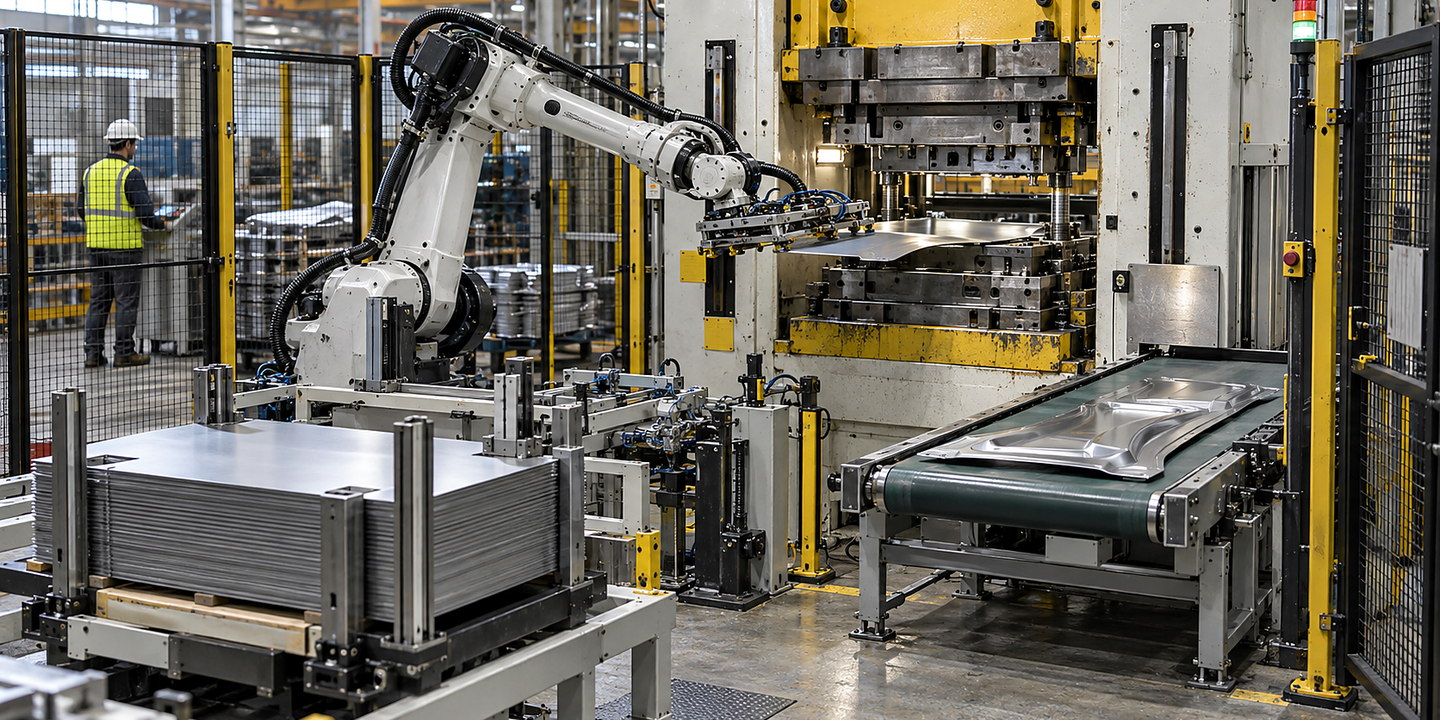
Match robotic sheet-metal loading to the actual sheet range, stacked presentation and required placement at the receiving machine. Separate a repeatable loading duty from a retrofit or changing-format duty, because presentation, interfaces and recovery requirements may differ.

Compare the two routes using the same surface, double-pick and placement criteria. The sheet-variation guide helps identify which conditions need representative trial evidence.

On the production floor

Match the solution to your product, part and operating needs — Sheet Metal Loading Robots

Plan sheet metal loading robots around your parts, process, cycle time, tooling, recovery and acceptance criteria. Discuss the highest-risk feasibility questions with Oxford Industrial Automation. Use the application examples to compare repeatable production using robotic sheet-metal machine loading with retrofit or flexible cells involving robotic sheet-metal machine loading.

Discuss your application
Application 1

Repeatable Production Using Robotic Sheet-Metal Machine Loading

For repeatable production, define the sheet range, normal stack presentation and receiving position for the repeated duty. Assess accepted placements across replenishment and normal machine delays, with records of double picks, incomplete release and unacceptable surface marks.

Explore this application
Application 2

Retrofit or Flexible Cells Involving Robotic Sheet-Metal Machine Loading

For a retrofit or changing-format cell, record the existing receiving-machine interfaces and the sheet, tooling and presentation changes expected. Identify what needs adjustment or reassessment at each change and how interrupted transfers will be handled before assuming one setup covers every format.

Explore this application
Choose the right route

Four questions that can change the recommended approach

What arrives?

Describe the real range for part, product and process variation for robotic sheet-metal machine loading and arrival pattern and presentation, plus presentation and upstream controls—not just a nominal drawing.

What must happen?

Define the required outcome for repeatable production using robotic sheet-metal machine loading, the allowed window and what your team can recover without outside help.

What surrounds it?

Record the space, services, neighbouring equipment, people, cleaning and data connections around retrofit or flexible cells involving robotic sheet-metal machine loading.

What result do you need?

Agree representative trials, difficult samples and the result record for run-off criteria and production evidence, including who will review it.

ApproachOften suitable whenWatch for
Sheet Metal Loading RobotsYou need a dedicated solution for a clearly defined duty, product or part range and line interface.Cycle time depends on the complete process rather than robot speed alone.
Purpose-Built Mechanical Automation for a Stable, Very High-Volume TaskConsider purpose-built mechanical automation where the sheet range, presentation and loading sequence are stable and the production duty justifies a dedicated mechanism. Confirm the scope with representative sheets and the actual receiving interface.Review separation, transfer, release and surface results, together with replenishment, access and recovery. Identify the changes needed for a new sheet format rather than assuming a dedicated mechanism accommodates future variation.
Operator-Assisted Fixtures where Flexibility or Business Case Does Not Support a Robot CellConsider operator-assisted fixtures where format variation, operator judgement or the business case supports an assisted loading route. Define which separation, presentation, placement and checking tasks remain with the operator.Assess the complete handling sequence, access, sheet support and recovery requirements for the assisted route. Compare accepted placements and production observations, with an application assessment of the work that remains manual.