In brief

For repeatable sheet-metal loading, assess accepted single-sheet placements over the intended operating pattern using representative stacks and the actual receiving position. Include replenishment, normal machine delays and the agreed response to double picks or incomplete transfers.

Record surface condition and release results as well as cycle observations. Use the run-off checklist to keep tested formats and unresolved exceptions clear.

On the production floor

Plan for the conditions your team handles every day — Sheet Metal Loading Robots

Plan sheet metal loading robots around your parts, process, cycle time, tooling, recovery and acceptance criteria. Discuss the highest-risk feasibility questions with Oxford Industrial Automation. For repeatable production using robotic sheet-metal machine loading, the deciding details include part, product and process variation for robotic sheet-metal machine loading, required cycle and production pattern and run-off criteria and production evidence.

Discuss your application
Your application

Details worth resolving early for repeatable production using robotic sheet-metal machine loading

Question 1

Part, Product and Process Variation for Robotic Sheet-Metal Machine Loading

For repeatable production using robotic sheet-metal machine loading, describe the current position, required outcome, acceptable limits and known exceptions for part, product and process variation for robotic sheet-metal machine loading. That lets us compare options against your real production rather than one nominal value.

Question 2

Arrival Pattern and Presentation

For repeatable production using robotic sheet-metal machine loading, describe the current position, required outcome, acceptable limits and known exceptions for arrival pattern and presentation. That lets us compare options against your real production rather than one nominal value.

Question 3

Required Cycle and Production Pattern

For repeatable production using robotic sheet-metal machine loading, describe the current position, required outcome, acceptable limits and known exceptions for required cycle and production pattern. That lets us compare options against your real production rather than one nominal value.

Question 4

Tooling, Sensing and Process Interfaces

For repeatable production using robotic sheet-metal machine loading, describe the current position, required outcome, acceptable limits and known exceptions for tooling, sensing and process interfaces. That lets us compare options against your real production rather than one nominal value.

Question 5

Operator Access, Recovery and Changeover

For repeatable production using robotic sheet-metal machine loading, describe the current position, required outcome, acceptable limits and known exceptions for operator access, recovery and changeover. That lets us compare options against your real production rather than one nominal value.

Question 6

Run-Off Criteria and Production Evidence

For repeatable production using robotic sheet-metal machine loading, describe the current position, required outcome, acceptable limits and known exceptions for run-off criteria and production evidence. That lets us compare options against your real production rather than one nominal value.

Your operating cycle

Plan for more than automatic running

Include replenishment, normal production, planned change, short stops, fault recovery, cleaning and maintenance for repeatable production using robotic sheet-metal machine loading. A fast automatic step can still leave your team with a slow or awkward overall process.

Prove the result

Test repeatable production using robotic sheet-metal machine loading against representative parts, tooling and difficult cycle conditions

Normal production

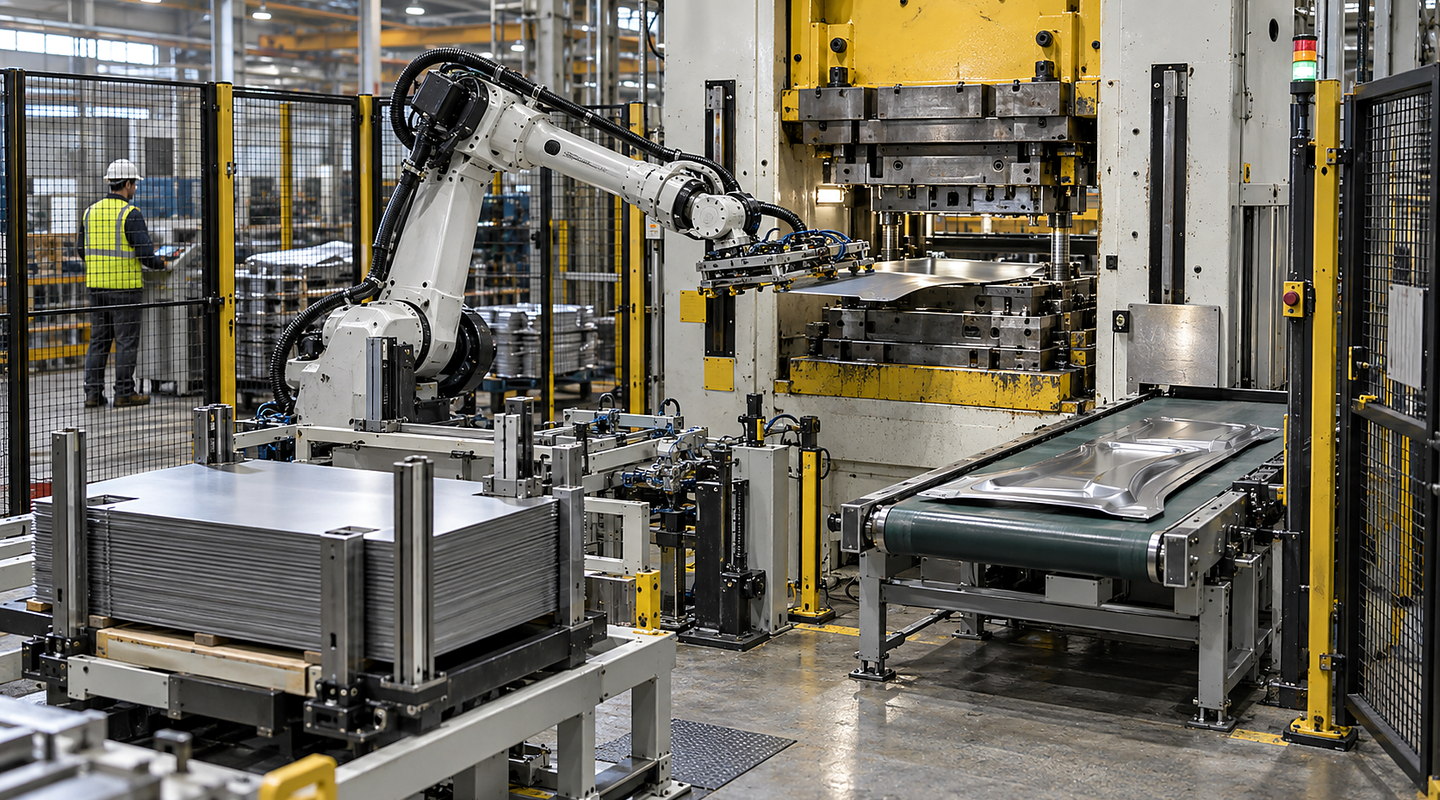
Run the agreed sheet range through separation, pickup, transfer, placement and release using the intended stack presentation. Record accepted placements and receiving-machine waits, including stack replenishment and normal interruptions in the operating record.

Difficult conditions

Include representative dimensions, thicknesses, weights, surface conditions and protective film from the proposed scope. Record any stack condition or format not represented, especially where separation or release observations differ from the nominal sample.

Fault and recovery

Agree which double-pick, incomplete-transfer or release conditions need to be identified and how the affected sheet and machine state will be assessed. Define the recovery responsibilities and restart checks through the application assessment; do not assume every exception is detected or automatically recovered.

Important limits

Be clear about what the trial has shown

Compare with Retrofit or Flexible Cells Involving Robotic Sheet-Metal Machine Loading if that operating pattern is closer to your application.